
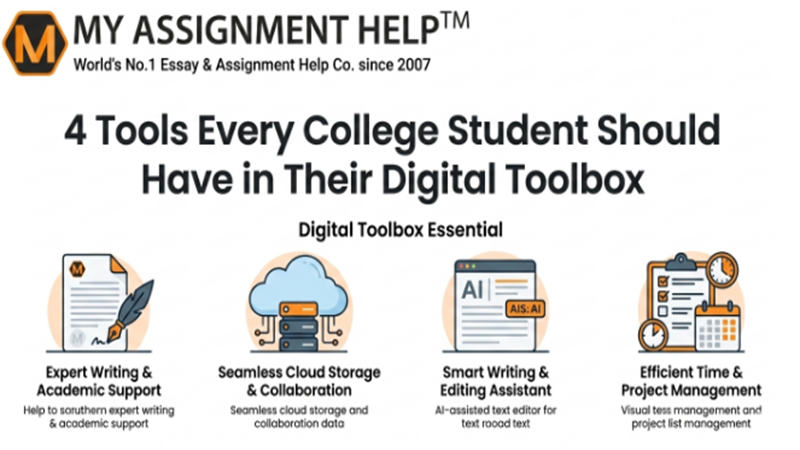
The landscape of American higher education has undergone a tectonic shift over the last decade. As tuition costs at four-year institutions continue to climb—averaging over $38,000 per year at private colleges according to the College Board—the pressure on students to perform has never been higher. Today’s undergraduate is no longer just a student; they are a project manager juggling internships, networking, and a rigorous credit load. In this high-stakes environment, a “Digital Toolbox” is not just a convenience—it is a prerequisite for survival.
Navigating the transition from high school to a major university like UCLA, NYU, or UT Austin requires more than just intelligence; it requires systems. While many students rely on basic word processors, the sheer volume of upper-division research often necessitates more sophisticated support. During peak midterm seasons, securing reliable essay writing help online has become a common strategy for students looking to maintain their GPA while managing complex schedules. This strategic approach to academic workload management allows students to focus on high-impact learning while ensuring their written submissions meet the rigorous standards expected in the US region.
Expert Insight: According to the National Center for Education Statistics (NCES), nearly 43% of full-time undergraduates are employed while studying. This “Time Poverty” is the primary driver behind the adoption of high-efficiency digital tools.
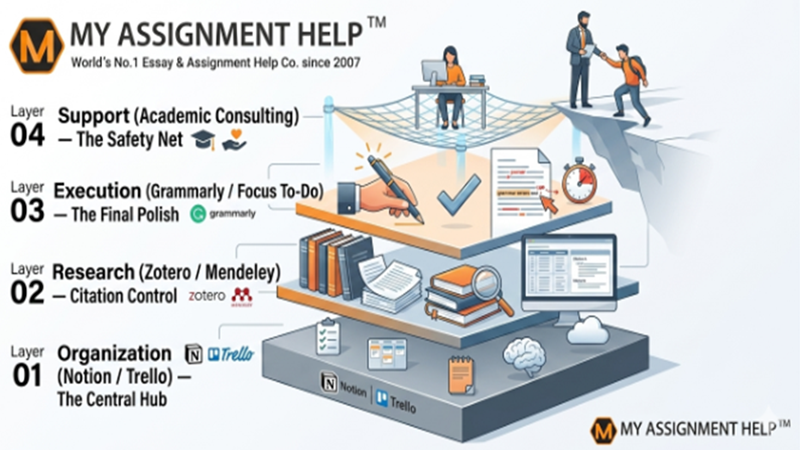
1. Notion: The “Second Brain” for Academic Governance
Notion has revolutionized the way students organize their academic lives. Unlike traditional folders, Notion acts as an all-in-one workspace where you can embed syllabi, track assignment deadlines, and manage lecture notes within a single, interconnected ecosystem. For US students, the ability to build “Class Dashboards” is its most powerful feature. You can create a database of your courses, link them to a master calendar, and even use the “Relation” feature to connect research notes to specific final projects.
By centralizing information, students reduce the cognitive load associated with searching for files across Google Drive or physical notebooks. This level of organization is the first step toward achieving the E-E-A-T (Experience, Expertise, Authoritativeness, and Trustworthiness) levels required in collegiate writing. When your data is organized, your arguments become clearer and more authoritative.
2. Zotero: Mastering Citations and Source Integrity
Academic integrity is the cornerstone of the US education system. Whether you are following APA 7th edition, MLA 9, or Chicago style, a single formatting error can result in significant point deductions. Zotero is a free, open-source tool that lives in your browser and allows you to “capture” research sources—from JSTOR journals to news articles—with a single click. It automatically extracts metadata, ensuring your bibliographies are flawless.
For those tackling 20-page senior theses or complex capstone projects, Zotero is indispensable. However, even with the best tools, the synthesis of data into a coherent paper can be a bottleneck. In such instances, many choose to buy essays online for college to serve as a high-quality model or template, helping them understand how to structure their own original research effectively within professional academic frameworks.
3. Grammarly: Enhancing Linguistic Precision and Tone
In the competitive US job market, written communication remains the #1 skill sought by employers, according to NACE (National Association of Colleges and Employers). Grammarly’s AI-driven platform goes beyond simple spell-check; it analyzes tone, clarity, and engagement. For a student, this means ensuring that a lab report sounds objective and that an argumentative essay sounds persuasive without being aggressive. It provides the “textual breathing room” necessary for your ideas to resonate with professors who grade hundreds of papers per semester.
4. Forest: Gamifying Focus in the Age of Distraction
The final tool in the toolbox isn’t for writing—it’s for protecting your attention. Forest is a productivity app that uses the Pomodoro technique to keep students off their phones. By planting a virtual tree that grows while you work (and withers if you leave the app), students gamify their deep-work sessions. This is critical for Gen Z students who face unprecedented levels of digital notification fatigue.
Key Takeaways for Academic Success
- Centralization is Key: Use Notion to prevent “information silos” across your different subjects.
- Automate Routine Tasks: Let Zotero handle citations so you can focus on the actual analysis.
- Audit Your Tone: Use Grammarly to ensure your writing matches the formal expectations of US universities.
- Strategic Resource Allocation: Utilize professional services to bridge gaps in your schedule or understanding.
Frequently Asked Questions (FAQ)
Q: Are these digital tools free for college students?
A: Most, including Zotero, are free. Notion and Grammarly offer robust free versions or student discounts using a .edu email address.
Q: Is it ethical to use online essay writing help?
A: Absolutely. When used as a study guide, reference model, or for structural inspiration, it is a legitimate academic support resource similar to tutoring.
Q: How can I ensure my writing is “AI-free”?
A: Focus on your unique “Experience” (the first ‘E’ in E-E-A-T). Incorporate personal reflections and specific classroom discussions that a generic AI cannot replicate.
About the Author
Dr. Marcus Sterling holds a PhD in Educational Technology and has spent over 15 years advising students across the US and Canada on academic workflow optimization and professional writing standards. He is a senior strategist at MyAssignmentHelp.
References
- College Board (2023). “Trends in College Pricing and Student Aid.”
- National Center for Education Statistics (NCES, 2023). “Employment Rates of Undergraduate Students.”
- NACE (2024). “Top Attributes Employers Seek on College Student Resumes.”
- Google Search Central (2024). “Creating Helpful, Reliable, People-First Content (E-E-A-T).”


15 thoughts on “4 Tools Every College Student Should Have in Their Digital Toolbox”
Comments are closed.